


Artificial intelligence (AI) is changing aviation recruitment faster than most HR teams can rewrite their policies. Airlines are quickly realising the need to use AI in aviation recruitment without weakening safety, fairness, or regulatory trust.
The industry has spent years chasing speed. AI now helps airlines screen applications, match cabin crew and pilot candidates to role requirements very quickly, schedule interviews, and forecast workforce needs. Yet, the bigger opportunity sits beyond automation. It lies in verification: confirming that the aviation talent entering a ‘safety critical role’ has a professional history that supports the responsibility they will carry.
For many operators, the fastest route to that balance is not by building every capability in-house, but by working with established recruitment experts who already understand aviation compliance, licensing requirements, and the realities of hiring across jurisdictions.
 Why AI in Aviation Recruitment Matters Now
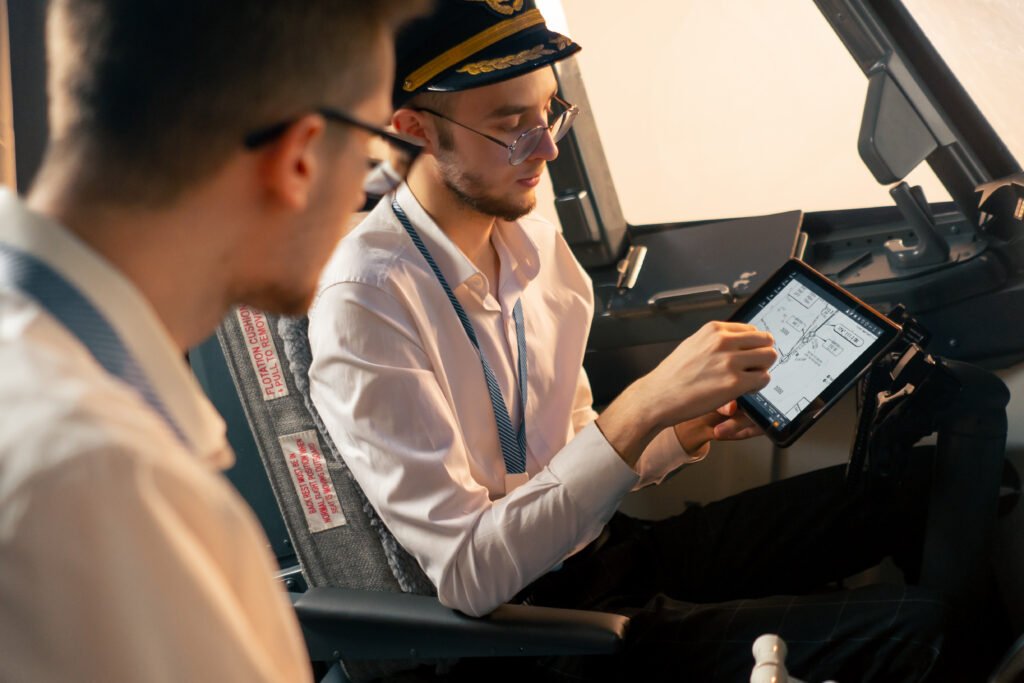
AI in aviation recruitment has moved from experiment to operating standard. Emirates Group’s Masar platform processed 3.5 million applications, shortlisted 390,000 candidates and supported 9,700 hires, using a three tier model that advanced clear matches, flagged borderline cases for human review and rejected unqualified applicants.
Speed, however, can impact quality. Employers in the aviation industry need workforce solutions that combine AI efficiency with recruitment expertise, aviation experts, and human judgement. Hitherto, the strongest model is a hybrid one: AI identifies and organises, while experienced recruiters assess context, culture, and safety parameters.
From screening to frontline enablement
AI also changes what airlines expect from the people they hire. Deloitte’s 2026 Airline CEO Survey found that AI-driven productivity tools and upskilling are now leading talent initiatives using AI in aviation recruitment
That shift affects job descriptions. Ground staff, operations controllers and maintenance planners increasingly need data literacy, digital confidence and the ability to work alongside intelligent systems. Airlines and airports are using technology to equip frontline teams with better information, automation and flexible workflows during disruption.
Aviation jobs are not solely defined by licences and experience, but by adaptability. A cabin crew candidate may need strong customer service skills, but also the ability to use digital tools during irregular operations. An engineer may need technical certifications, but also comfort with predictive maintenance data.
The right recruitment partners can help employers define these evolving role profiles. Rather than relying on generic job specifications, aviation specialists can translate operational needs into practical hiring criteria, benchmark candidate availability and identify where contract, permanent or project based staffing makes the most commercial sense.
 The verification gap in aviation hiring
The future of AI in aviation recruitment should not be measured only by how quickly AI identifies qualified candidates, but by how effectively the industry verifies their professional backgrounds.
Today, background screening varies widely by jurisdiction. Since relevant information can sit across airlines, regulators, previous employers and national databases, a criminal record check alone rarely gives a complete picture of a candidate’s suitability for a safety-critical position. Previous safety violations, confirmed disciplinary actions, regulatory findings, training failures and documented misconduct may all be relevant. Yet, these records are often fragmented, inconsistent, or difficult to access across borders.
Case study: FAA pilot records database
The United States offers a useful starting point. Air carriers must query the FAA Pilot RecordsDatabase before allowing a pilot to begin service, which applies to relevant US-regulated operators. The database gives operators electronic access to training, certification, enforcement, employment history, qualifications and certain driving records.
The system requires employers to evaluate relevant records before making a hiring decision. While not all employees’ data is made available, records that must be reported under FAA requirements may also include records reported by previous employers, such as training results, check failures, disciplinary actions and reasons for leaving.
This is far from being a perfect global model, but it does prove that aviation can centralise verified, safety-relevant employment information without relying on rumour, informal references or incomplete CVs.
 Could AI Create a Global Verification Framework?
AI assisted verification
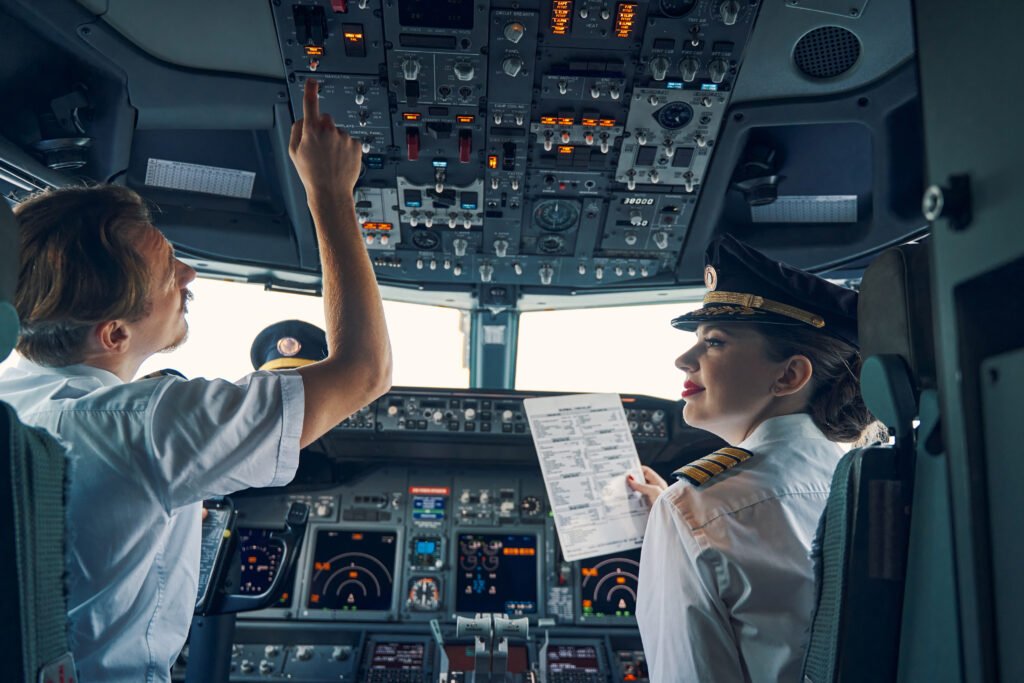
AI in aviation recruitment should identify inconsistencies in employment histories, cross reference authorised records and flag missing information for human investigation. For example, if a candidate claims continuous employment but records show an unexplained gap, the system could prompt a recruiter to investigate before an offer progresses.
This matters most in pilot recruitment and other safety critical hiring. An APAC airline recently found that AI could parse applications against licence, type rating, and experience requirements, while also identifying qualified candidates whose CVs used different terminology for the same certification. Applied carefully, the same logic could support background screening. AI could compare declared experience with verified records, highlight discrepancies and create an audit trail for compliance teams.
Recruitment partners become especially useful in combining AI-assisted screening with human review, ensuring that flags are investigated properly and that candidates are not rejected for superficial reasons. This protects both the operator and the candidate.
AI in aviation recruitment: Global information sharing
The harder challenge is cross border data sharing when. Could regulators and airlines agree on common standards for exchanging verified safety relevant employment and disciplinary records?
The ICAO already requires crew identity documents to be issued only after a background check conducted by, or on behalf of, the relevant public authority. That creates a foundation for broader cooperation. What is missing is a shared framework for employment records, disciplinary findings and training outcomes across jurisdictions.
 The Risk: Bias Without Governance
As AI in aviation recruitment improves consistency, it also creates new challenges. A Stanford study of 4 million applications across 1,700 job postings found that an AI hiring tool increased racial bias and repeatedly rejected similar candidate groups.
Other research found that large language models (LLMs) can develop new biases during repeated hiring decisions, even in controlled simulations. A separate study found that human recruiters produced fairer gender outcomes than AI alone, while hybrid human AI processes produced the fairest candidate lists.
Furthermore, technology alone rarely solves a hiring problem. Airlines still need access to qualified aviation talent, market intelligence and candidates who meet licence, visa, language and training requirements. This is where specialist recruitment partners add value, since they combine AI tools with recruitment expertise, aviation experts, and established candidate networks, helping operators reduce time to hire without lowering standards.
Building a responsible model
A responsible AI recruitment model should include:
● Human review for all safety critical hiring decisions.
● Bias testing across gender, nationality, age and other protected characteristics.
● Consent based access to verified records.
● Audit trails for every automated recommendation.
● Clear escalation paths when AI flags a discrepancy.
These controls protect candidates, but they also protect airlines. A poor hire in aviation is not just a recruitment cost. It can become an operational, reputational and safety risk. Adding to the element of safety and control, Jekaterina Shalopanova, Aerviva’s Chief Business Officer (CBO) says: “AI can help us identify candidates faster, but speed alone does not make aviation recruitment safer. The real value comes from understanding who we are recruiting, verifying what can be verified, and ensuring that human judgement remains central to every critical hiring decision.”
 Conclusion: What Aviation Leaders Should Do Next
There is no doubt that AI will keep reshaping aviation recruitment, contracting and background screening. The winners will not necessarily be the airlines that automate the most, but those that combine AI efficiency with recruitment expertise, aviation insight, and rigorous verification.
In aviation, AI should support recruitment expertise, not replace it. Airlines need governance: clear decision boundaries, human checkpoints, bias audits and documented reasoning.
The future of recruiting in aviation is AI working with people to protect the industry’s most valuable asset: trust in the professionals who keep aircraft flying safely.
Contact Us
 United Arab Emirates