



Flight Attendant Recruitment Just Got More Competitive
Flight attendant recruitment has never been more competitive. Apart from the many drivers putting pressure on the aviation job market, including passenger traffic rebounds and fleet expansions, carriers worldwide are scrambling to staff cabins with qualified crew. More particular to flight attendant recruitment, however, surges in hiring are also due to changes in airlines’ operational trends, expanding markets and networks, as well as shifts in candidate trends.
Understanding these dynamics will better equip operators to build resilient, service-ready cabin teams. Forecasts predict the need for over 1 million new cabin crew members through 2045, yet acceptance rates at major airlines remain under 5%. Find out how airlines can increase their talent pool, decrease their attrition rate, and optimize their hiring strategies for all aviation personnel.
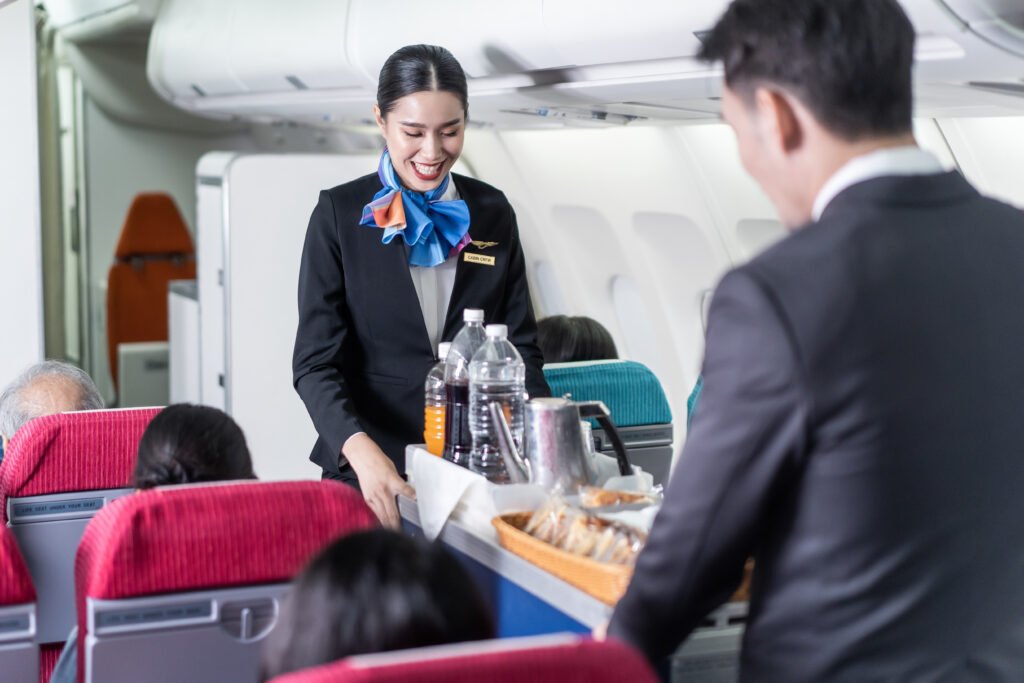
The Tightening Market for Flight Attendant Recruitment
Global passenger traffic and Fleet Expansion Drive Demand
To start, growing global passenger traffic is an obvious driving force for the increase in flight attendant hiring. Having rebounded strongly post pandemic, IATA reports record levels in passenger travel with international demand up 7.1% year-over-year, which is set to double in the next two decades. Supporting these numbers is Boeing’s outlook; forecasting demand for more than 1.02 million new cabin crew members through 2045, with around 40,000 openings needed annually just to support fleet growth and replacements.
Fleet expansion is compounding the flight attendant recruitment challenge. The global commercial aircraft fleet is projected to grow 2.4% annually through 2035, with widebody deliveries surging among US and Middle Eastern carriers. Each new widebody aircraft requires additional crew under EASA and FAA regulations; one extra flight attendant per 50 passenger seats above the baseline. India and South Asia alone will need roughly 51,000 new cabin crew by 2044 as their fleets triple.
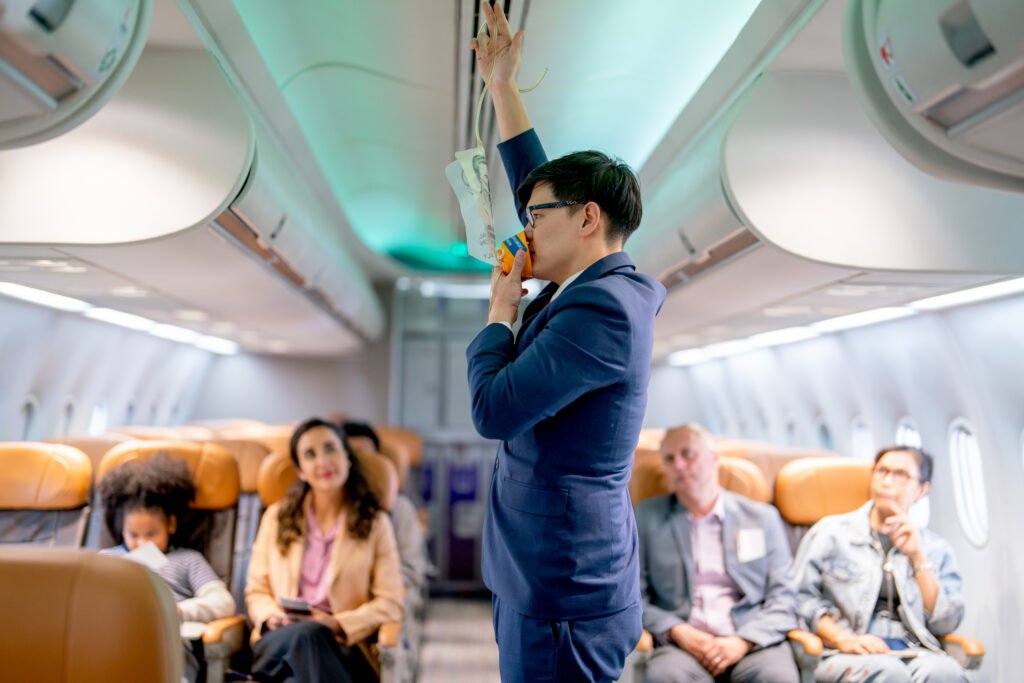
Premium experiences, retirements, and regulatory compliance add pressure
More airlines are investing in premium inflight experiences, raising standards for flight attendant recruitment. In such cases, carriers will increasingly seek multilingual, hospitality trained, crew who can deliver a five-star service in business and first class.
Meanwhile, replacement flight attendant hiring has been accelerating since the post pandemic exodus, which saw thousands of senior flight attendants accept early retirement. This inevitably led airlines to hire younger, less experienced recruits to fill cabin roles, altering onboard experience levels and teams.
However, annual cabin crew openings are now widely reported to be closer to 50,000 globally when accounting for 5% growth and 10% retirement eligibility. Below are some interesting examples of ongoing flight attendant hiring drives worldwide.
Flight Attendant and Cabin Crew Hiring Drives
Qantas will reportedly recruit over 600 flight attendants within five years, as it aims to use this base to support a growing international network. The operator plans to open its first-ever cabin-crew base in Singapore by September 2026.
In Europe, Ryanair is currently offering flight attendants additional perks to boost recruitment. As the continent’s largest airline by scheduled and chartered passengers, new incentives are just the latest strategy exposing the need to get ahead in this very competitive market. In addition, Wizz Air is continuously running open recruitment across nearly 30 European locations.
Back to the Asia-Pacific, Vietnam’s airlines are intensifying cabin crew recruitment as fleet and route expansion increase staffing needs. Vietjet operates more than 100 aircraft while Vietnam Airlines has ordered 50 Boeing 737-8 aircraft, creating continuing demand for flight attendants, as yet another airline, Sun PhuQuoc Airways, plans to recruit about 1,000 flight attendants by the end of this year.
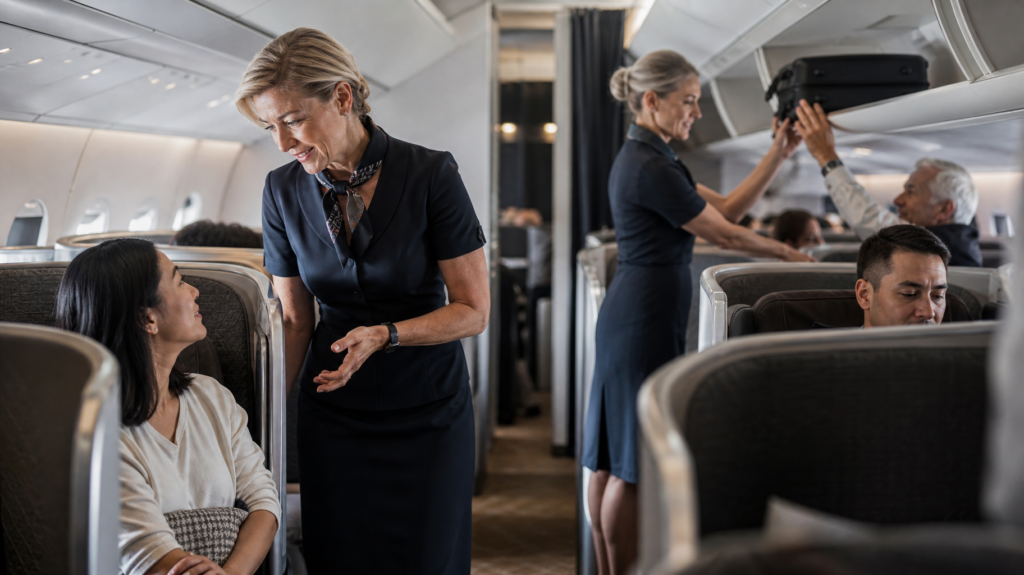
In the Middle East, Emirates, RiyadhAir, and Qatar Airways are all making strides in flight attendant and cabin crew recruitment. To wit, Emirates is holding open days worldwide throughout the year, with the global Open Day campaign in full swing. Saudi Arabia’s budding RiyadhAir is holding similar events worldwide, while Qatar Airways continuously runs international recruitment drives and open days for cabin crew positions based in Doha. RiyadhAir together with AirBorneo are worth keeping an eye on; they are the newest carriers in the Asia-Pacific region, pushing growth and recruitment in the aviation sector.
In the US, one might find slightly less aggressive recruitment strategies, but that may be tied to regulation rather than market pressures. Indeed, the flight attendant and cabin crew recruitment market is just as competitive, as the Bureau of Labor Statistics projecting overall employment to grow by 9% through 2034. However, US flight attendants have no federally mandated retirement age, unlike airline pilots who must retire from commercial flying at 65. Flight attendants instead remain subject to airline policies and health and performance standards, enabling potentially lifelong careers.
Fierce competition: Applications vs. training slots
Despite this volume of openings, application processes remain highly competitive. Apart from low acceptance rates found across the industry, aspiring flight attendants also face high eliminations from the start, with typically more than 90% of applicants routinely filtered out during the first assessment.
Yet another challenge is the sheer number of applicants for flight attendants and cabin crew openings. Data consistently shows that the global application volume for flight attendants is overwhelmingly disproportionate to the roles they will eventually fill, ranging from 1% to 4% of all applicants, making it one of the most competitive career fields.

Insight for Operators: How to Beat the Competition
Recruitment shifts: Flexibility, better benefits, and digital screening
To combat churn and attract talent, airlines need to re-engineer their hiring pipelines.
First and foremost, operators should implement flexible pay structures to benefit from lower overheads, mitigating financial risks during economic downturns, and positioning themselves to scale operations rapidly. For their new flight attendant recruits, they could benefit from picking up extra trips, or achieving the better work-life balance they seek
Other implementations to consider are adding more benefits to attract top talent, employing digital screening to streamline hiring processes, and deploying stronger retention programs to lower attrition rates. Moreover, virtual interviews and remote assessments should become standard practice to enable faster global candidate reach.
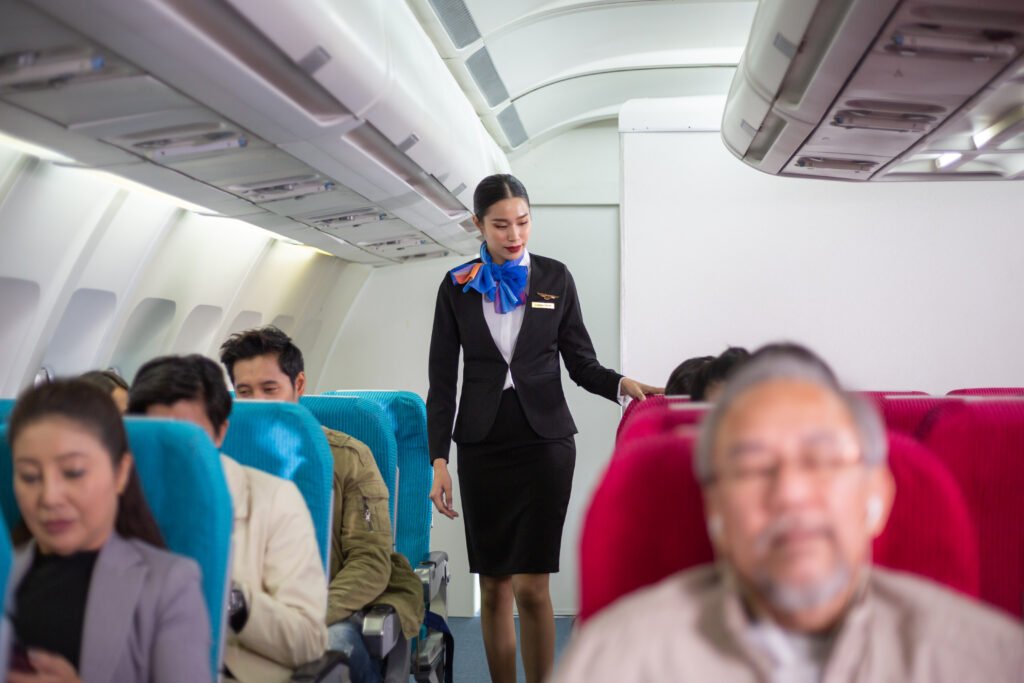
Work with expert recruiters
Airlines increasingly turn to specialist aviation experts to lead their hiring efforts. Apart from flight attendant recruiting, expert recruitment agencies provide clients with access to deeper talent pipelines for a variety of aviation personnel, as well as faster sourcing, and better workforce planning.
Operators will also benefit from extensive international networks, crucial for recruiting multilingual aviation talent and securing local crew for diverse routes. Specialist recruiters run large-scale regional assessment days, filtering thousands of aviation jobs applicants down to qualified shortlists quickly.
As Aerviva CEO Mindaugas Rainys points out: “While the formal requirements for flight attendants may be less complex than for pilots, airlines focused on service quality are increasingly looking beyond minimum qualifications. They want experienced professionals who understand the specifics of the role, speak multiple languages, bring a broader skills set, and can adapt to rapidly changing aviation and passenger-service expectations. This is where external recruitment partners can add real value — not simply by finding available cabin crew, but by giving airlines access to a much broader and more experienced talent pool through established international networks”.
Operators should look for end-to-end recruitment and contracting services for aviation professionals. The reason being that recruiters handle time consuming vetting stages since they pre-screen candidates against strict industry criteria such as physical health and initial background verifications. They furthermore assess cultural fit, emotional resilience, and hospitality skills which subsequently reduce costly dropouts during intensive airline safety training.
Importantly, experienced recruiters in aviation stay on top of aviation and employment regulation. Regulatory and safety compliance requirements further tighten the pipeline since all prospective crew must meet strict medical, security, and training standards set by civil aviation authorities in their respective regions.
Conclusion: Flight Attendant Recruitment Insights
In today’s tight labour market, flight attendant recruitment is especially challenging. Airlines face unprecedented competition for qualified cabin crew, driven by fleet expansion, premium service expectations, and a shrinking pool of experienced candidates.
The operators that will win are those re-engineering pipelines with flexible pay, enhanced benefits, digital screening, and stronger retention. Even more critically, partnering with specialist aviation recruiters will enable a broader global reach, rigorous pre-screening, and regulatory expertise that internal teams cannot match alone. In today’s competitive aviation environment, partnering with expert recruiters is less of an expense than a strategic investment.
Contact Us
 United Arab Emirates