


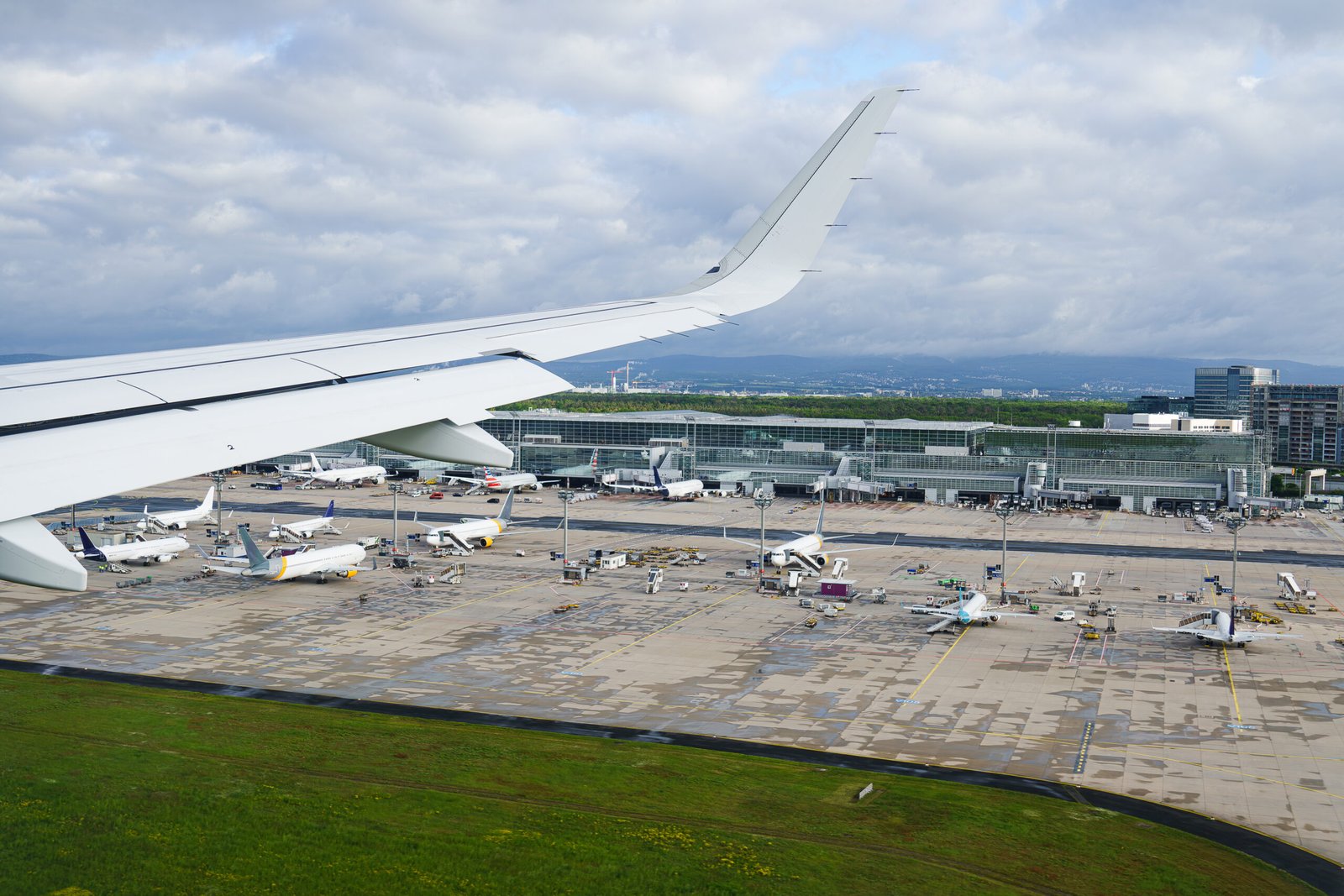
New Routes & Unexpected Europe Market Access Driving Aviation Growth
Aviation growth is being reshaped by a mix of new routes, regulatory shifts (especially in Europe and the UK), and market openings that few would have predicted just a few years ago. Renewed or completely new access can definitely generate quick changes and surges in aviation personnel demand, but the winners will be the companies that move fastest with it.
In practical terms, new and renewed routes create new commercial opportunities, new aviation jobs, and stronger demand for aviation talent across operations, compliance, maintenance, and customer service.
Aviation Growth Driven by Access, Not Just Demand
EU market access is changing fast
Europe remains one of the world’s most important aviation markets, and any change in EU market access could translate into outsized value. Regulators are reassessing access to certain airlines, driving aviation growth.
New approvals and safety list changes are part of Europe’s plan to grow the industry and diversify connectivity. As access improves, airlines reconnect lost city pairs, restore business travel, and rebuild cargo and passenger flows.

Pakistan’s return to Europe after safety restrictions ease
The European Union Aviation Safety Agency (EASA) lifted its four-year ban on Pakistan International Airlines (PIA) in 2024, allowing the airline to resume flights to Europe. Likewise, The United Kingdom (UK) lifted its five-year ban on Pakistani airlines in July 2025 after determining that Pakistan had made significant improvements to its aviation safety oversight. The bans, imposed in 2020 after a fatal crash and concerns over Pakistan’s aviation oversight and pilot licensing, were removed after authorities concluded that Pakistan Civil Aviation Authority (PCAA) had made significant improvements to meet international safety standards.
Both decisions strengthened PIA’s finances by restoring lucrative European and UK routes. In fact, PIA resumed direct flights between Lahore and London Heathrow in March. The service, operating once weekly with a Boeing 777, complements PIA’s three weekly Islamabad–Heathrow flights and marks another milestone in the airline’s return to the UK market following the lifting of British and European aviation restrictions.
ITA airways resumes flights to Libya’s Tripoli after 10-year gap
ITA Airways will resume scheduled flights between Rome Fiumicino and Tripoli’s Mitiga Airport on 3rd September. The airline will operate two weekly flights using Airbus A319 aircraft, remaining the only EU carrier offering scheduled passenger services to Libya, for now.
The resumption reflects growing confidence in Libya’s aviation sector and strengthens air connectivity between the two countries, and more broadly the two continents. Stakeholders expect not only an increase in business and diplomatic travel, but family travel also. The route also reinforces Italy’s longstanding ties with Libya while contributing to the gradual recovery of international air links following years of political instability and operational disruptions.

Kyrgyzstan’s removal from the EU Air Safety List
Kyrgyzstan has been removed from the EASA’s list after nearly 20 years, allowing airlines certified in the country to seek approval to operate flights to EU destinations. The ban, imposed in 2006 over deficiencies in aviation safety oversight, was lifted after the European Commission (EC) recognised significant regulatory reforms, successful audits, and improved compliance with international safety standards.
The decision has already strengthened Kyrgyzstan’s aviation sector, encouraging tourism, and foreign investment. As a result, the government has announced preparations to launch direct connectivity next year. Target cities include Milan (MXP), Berlin (BER), Brussels (BRU), Paris (CDG), and London (LHR). To support this route expansion, especially European long-haul schedules, national carrier Asman Airlines signed an agreement to acquire two Airbus A321 long-range aircraft, scheduled for delivery by March 2027.
For the moment however, there are indirect routings available, acting as a bridge until direct lines launch. Currently, European travelers primarily fly into Bishkek or Osh through layovers on Pegasus Airlines via Istanbul or Dubai. There is also an operational 6.5-hour direct flight from Bishkek (BSZ) to Prague (PRG) handled via Kazakh carrier SCAT Airlines.

Other developments to watch closely
There is gradual restoration of air connectivity in markets previously affected by conflict or security concerns. International airlines have progressively resumed services to Tel Aviv and Beirut as regional security conditions have improved, reconnecting these important commercial centres with Europe and beyond.
In Syria, regional carriers have restarted flights to Damascus following recent political developments and the easing of some international restrictions. In fact, Syrian Airlines is also scheduled to resume direct flights between Damascus and Amsterdam on 2nd July 2026.
Aviation Jobs Creation from New Routes and Market Access New
New routes and restored market access translate directly into measurable job creation across the aviation value chain. Every 1 million additional air passengers supports approximately 1,000 direct aviation jobs.
In Europe alone, forecasts indicate an increase from 11.1 million flights in 2025 to around 11.4 million this year. Even a conservative 2–3% traffic increase typically correlates with tens of thousands of additional roles across airlines, airports, and support services.
IATA & industry workforce studies
A single long-haul aircraft can require 10–12 flight crews, 100+ cabin crew rotations, and 20–30 maintenance and ground personnel. Each new long-haul route can generate 200–300 direct jobs, while airport expansion tied to route growth multiplies this impact significantly due to increased demand in ground handling and security. Specifically to the above routes:

Aviation Routes to Watch in Europe and Asia
Asia & Europe aviation growth
One of the clearest examples is AirAsia X’s Europe return via Bahrain. The airline is launching a one stop Kuala Lumpur–London Gatwick service through Bahrain, which marks its first UK service since 2012 and a notable step back into the European market. This development shows how some carriers are using hub partnerships and stopover strategy to overcome aircraft range, cost, and demand constraints while still targeting premium long haul markets.
China–Europe connectivity is also strengthening. Air China is launching Beijing Daxing–Milan Malpensa service, while China Eastern is adding Shanghai Pudong–Zurich and resuming Shanghai–Stockholm flights. These moves underline how Asian carriers are using Europe routes to rebuild network depth, compete on premium traffic, and capture spillover demand as global travel normalizes.
Canada-Europe aviation growth
Canada is another useful signal for the aviation market. Air Canada is adding Montreal–Palma de Mallorca, along with several other Europe links from Montreal and Toronto, while Air Transat is targeting underserved transatlantic routes such as Montreal–Dakar and Montreal–Reykjavik. New aviation routes are no longer limited to traditional business corridors; leisure, diaspora, and underserved point to point markets are increasingly driving growth.
Broader European trend
The broader trend is that airlines are becoming more selective and more aggressive at the same time. Europe’s new routes suggest demand is strongest where tourism and business travel are already deep. Furthermore, Europe has a busy summer ahead with new flight paths connecting major hubs with emerging and secondary destinations. These include Florence, Tirana, Alta, Kos, Thessaloniki, Turin, Kuressaare, Toronto and Melbourne. Airlines are also increasing services to Mediterranean, Nordic and regional destinations, improving connectivity and offering travellers greater choice.

Leadership Insight: Long-Term Structural Shift in Global Aviation
In the near term, the aviation industry’s recovery has been driven by the normalization of international travel, the release of pent-up demand for long-haul and diaspora travel, and the rapid reinstatement of routes that were suspended during the pandemic. While these factors explain the current surge, they are occurring alongside deeper, long-lasting changes that are reshaping the industry.
These structural changes include regulatory realignment through revised safety frameworks and bilateral air service agreements that are expanding market access, as well as advances in aircraft technology, with models such as the Airbus A321XLR making long-haul narrowbody operations commercially viable on lower-passenger routes.
At the same time, the forecasted demand discussed above is undeniably supporting air passenger trends that are becoming more fragmented, with increasing traffic between secondary cities, leisure destinations, and diaspora markets reducing reliance on traditional hub airports.
The geopolitical developments from which these developments are born, including the reopening of parts of the Middle East, Central Asia, and North Africa, are also creating new aviation corridors.
Consistent with these trends, forecasts from IATA and Eurocontrol project sustained growth in global passenger traffic over the coming decades, with Europe remaining a key anchor market. Although the pace of expansion may moderate, the long-term trajectory clearly points to more routes, greater connectivity, and increased competition across the global aviation network. In sum, this planned growth in international aviation reflects a broad structural transformation of the global aviation market, and not simply short-term opportunities for growth.

Workforce Planning and Aviation Recruitment
While airlines are restoring market access and increasing capacity, operational complexity is intensifying. A critical constraint is the availability of skilled personnel, including pilots, engineers, cabin crew and airport staff.
As a result, workforce planning has become a strategic priority, with airlines that invest in recruitment, training and retention better positioned to capitalize on emerging market opportunities and sustain long-term growth. In fact, Europe’s overall airline capacity grew by 2.1% year on year to 164 million seats in June, with international capacity up 2.5% and low cost carrier capacity up 5.3%.
Furthermore, European airline capacity across the Easter 2026 peak reached around 25 million seats, up 1.6% year on year, with intra-European routes accounting for 74% of total capacity. Eurocontrol data referenced in early 2026 reporting showed 11.1 million flights in European airspace in 2025, up 4% from the previous year, with forecasts for about 11.4 million flights in 2026.
Aviation job growth analysis & workforce shortage
Aviation growth is increasingly limited by workforce capacity, not passenger demand alone. In Europe, air transport labour shortages remain a real issue, especially in skilled and operational roles. In fact, the latest conclusive figures confirm 2,617 aviation job shortages and around 53 million workers in occupations affected by shortages or surpluses, the problem is increasingly structural, driven by demographic change, skills mismatches, and mobility constraints.
Furthermore, aviation’s regulatory capacity is being constrained by a shortage of qualified peoplein civil aviation authorities. In sum, 42% of audited states scored below 60% in effective implementation in human-resource-dependent areas, staffing constraints were the primary factor in 67% of significant findings, and nearly 50% of 70 surveyed states said more than one-third of technical staff would retire or leave within 10 years.

Remaining challenges ahead
Alongside these positive developments, structural challenges within the aviation industry are expected to linger despite improving market conditions.
Conclusion: Aviation Workforce Demand
More routes and higher capacity means stronger demand for skilled aviation personnel. More flights mean more cockpit crew rotations, more engineering coverage, more cabin crew rosters, more airport handling, and tighter scheduling across operations.
In fact, recruitment coverage points to multiple European, Middle Eastern, and Asian carriers hiring pilots. Industry recruitment roundups and job market analysis reference active hiring across airlines such as Emirates, Ryanair, Wizz Air, beOnd, easyJet, Lufthansa Group, British Airways, Jet2.com, Virgin Atlantic, and airBaltic. Other openings include A320 Captains and First Officers in Pakistan, A320 Captains/First Officers in Jordan, A320 Captains in Vietnam, which shows the same network-growth pressure extending beyond Europe.
That said, the demand is not just about headcount. It is also about specialization, because new long haul routes and restored market access require people with regulatory knowledge, safety compliance experience, multilingual customer support skills, and operational resilience.
Contact Us
 United Arab Emirates