



How Higher Tourism in Europe Is Driving Aviation Growth and Recruitment Demand
The current upwind in Europe’s aviation growth is a workforce planning signal to focus on recruitment strategy. Europe’s aviation sector has entered a new growth cycle, driven largely by higher tourism demand across key leisure and business destinations. Airlines are increasing frequencies, opening seasonal routes, and investing in fleet deployment to capture resilient passenger demand from Mediterranean hotspots to expanding regional airports.
Consequently, capacity ambitions also create operational pressure, particularly around access to skilled aviation personnel. Growth markets require faster hiring cycles, multilingual labour pools, and scalable recruitment. For carriers and aviation HR leaders, growth now more than ever depends on strategic talent acquisition and specialist aviation recruitment partners.

Passenger Demand Powers European Aviation Recovery
Passenger numbers continue to rise
For over two years, Europe has experienced a resilient momentum in the aviation sector. In fact, the industry is now considered to have moved beyond recovery and back into a state of expansion mode. Furthermore, carriers across the continent averaged around 28,200 daily flights during summer peak periods in 2025 as Southern European states continued to attract inbound tourism flows and sustained low-cost carrier expansion.
Data on state traffic is extremely encouraging. The top 10 States saw +4.0% more flights; the UK led (5,609/day, +2.2%), followed by Spain (5,211, +4.5%) and Germany (4,888, +3.8%). Poland ranked 9th (+9.1%), while Greece (+23%) and Türkiye (+12%) exceeded 2019 levels.
LLC become Europe’s largest traffic segment
low-cost carriers (LCCs) represented 35.2% of all European traffic in 2025. This makes them the single largest market segment, slightly ahead of mainline (34.7%) by just over 200 daily flights. The LCC segment grew +6% compared to 2024, outperforming mainline (+4%). Regional held 12%, while the Business aviation, cargo and charter segments maintained their stability.
In sum, air travel passenger demand across Europe continues to benefit from a resilient leisure travel demand, together with strong VFR (visiting friends and relatives) traffic, as well as a gradual recovery in selected corporate travel sectors. In 2026, for instance, Europe’s aviation network was operating above comparable 2025 levels during several reporting weeks, with daily flights exceeding 26,000 in February and surpassing 30,000 by April.
Southern Europe leading aviation growth in 2026
Southern European states have benefitted from a macrotrend resulting in aviation growth due to heavy exposure to inbound tourism, leisure traffic, diaspora flows, and LCC networks, effectively delivering some of the strongest results in Europe.
In fact, Greece, Portugal, Spain, Cyprus, Malta, Croatia, and Albania all benefited from strong summer demand and longer shoulder seasons. Spain in particular remained one of Europe’s standout markets, supported by diversified inbound tourism, domestic connectivity, and continued expansion through the Aena airport network.
This confirms a structural shift first seen after the pandemic: travellers continue prioritising leisure experiences, sun destinations, and short-haul breaks over traditional corporate-heavy travel patterns. As the (ex: Germany–Mediterranean leisure corridors).
Regional airports benefit from tourism demand
Airports tied to leisure demand have outperformed many traditional hubs. Rather than only major capitals growing, secondary airports in tourism-heavy regions captured strong increases in frequencies and passenger output.
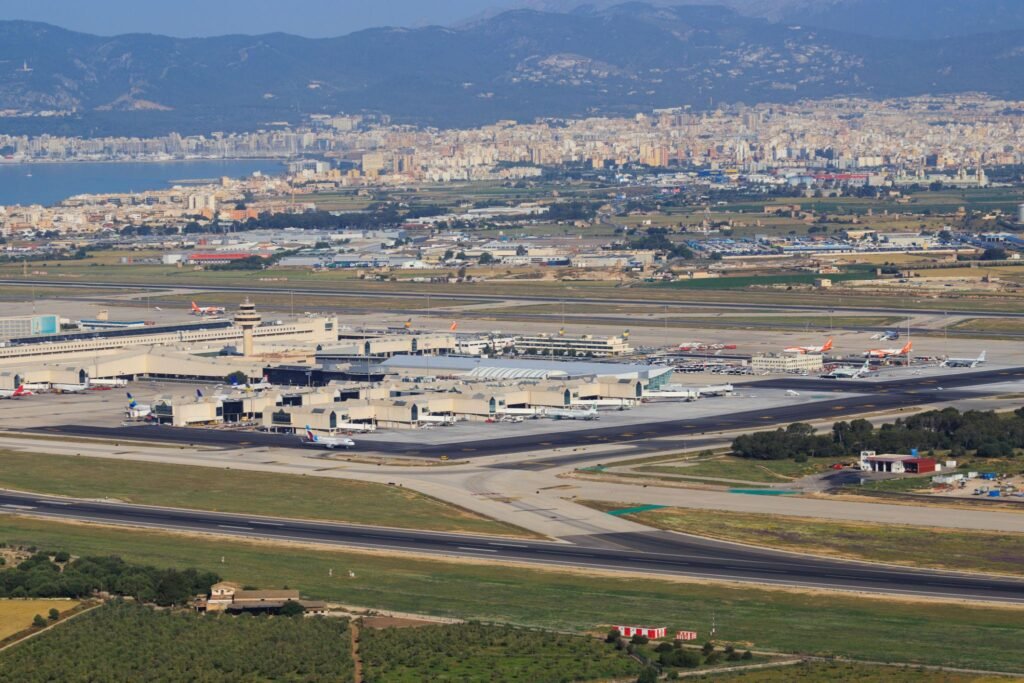
These include Alicante, Malaga, Palma de Mallorca, Faro, Heraklion, Tirana, and Dubrovnik. Tourism demand is thus decentralising growth away from legacy hub concentration and into point-to-point networks.

Challenges That Could Slow European Aviation Growth
Geopolitical challenges
It must be highlighted that Europe’s production capacity remains significantly strained. In fact, aircraft availability, engine reliability, air traffic management performance, and airport infrastructure capacity are factors posing consistent challenges to capacity and growth. Consequently, aviation traffic in 2026 is still expected to grow, but at a tempered and uneven pace, depending on specific regional challenges.
Addressing the elephant in the room, Ukraine’s airspace has been closed since February 2022 and the geopolitical tensions in the Middle East including traffic to/from Israel have affected various flows and overflights. It is true that with neighbouring airspace absorbed much of the traffic for both conflicts, however some disruptions will inevitably be sustained. In fact, airspace and route unavailability has put pressure on Air Navigation Service Providers (ANSPs), despite several operational measures.
Rising jet fuel prices
As a direct consequence of the disruption in the Strait of Hormuz, global jet fuel prices have surged sharply across April 2026. Airlines are scaling back routes amid ongoing network adjustments, and operational costs have nearly doubled since February. In some cases oil is exceeding $200 per barrel, significantly increasing airline operating expenses forecasts for the coming months.
Unfortunately, this spike is already reshaping airline strategies for the anticipatingly busy summer months. Major carriers such as Air France-KLM and EasyJet, for instance, have reduced capacity growth forecasts while SAS has already confirmed flight cancellations amid this ongoing volatility. Just this week, RyanAir’s CEO warned some European airlines could fail if jet fuel prices stay high throughout the summer.
Despite strong travel demand, capacity will remain tight due to this ongoing rise in jet fuel prices. Although this crisis is not endemic to Europe as it affects operational costs across aviation markets, it is surely poised to cause further disruptions for European carriers.

Build Airline Capacity with Strong Aviation Personnel
Aviation employment strategy for growing airlines
Passenger demand across Europe continues to benefit from a combination of resilient leisure travel, a strong VFR segment and, in selected markets, a gradual stabilisation of corporate travel. Consequently, as growth continues to endow Europe with a strong aviation recovery, operators can only benefit from this by opportunity by operationalising capacity.
For aviation HR teams, it means faster scaling models and more aggressive recruitment cycles. There clearly needs ongoing flight crew recruitment, cabin crew sourcing, dispatch and OCC staffing, and airport operational personnel.
Ultimately, airport decentralisation from legacy hubs will also result in more seasonal staffing needs, ramping up handling expansion, as well as more security and maintenance recruitment. Simply put, workforce planning is becoming just as important as infrastructure investment.
Work with recruitment experts
For aviation HR departments, this demand volatility could translate into internal recruitment teams struggling to keep pace alone, making specialist recruiting partners increasingly valuable.
For instance, specialist providers can support international recruitment, headhunting, candidate screening, assessments, and bespoke testing programmes tailored to aviation employers. Their global aviation network spans tens of thousands of professionals.
For airlines and operators, external recruiting partners become especially valuable when hiring across Europe, the Middle East, or multi-AOC environments due to their multi-jurisdictional approach. Furthermore, Aviation HR specialists offer faster Time-to-Hire, which is critical for aircraft induction, summer scheduling, or new base launches.
Moreover, working with recruitment experts also allows inhouse HR teams to focus on retention, culture, training, and strategic planning due to the reduced internal HR Burdens as a consequence.

Conclusion
Europe’s tourism-led aviation expansion presents significant opportunities for airlines. Passenger demand remains strong, low-cost carriers continue to stimulate new markets, and regional gateways are attracting greater traffic than ever before.
Yet long-term success will depend on how effectively operators scale their workforce alongside capacity growth, as access to qualified talent is becoming a decisive competitive advantage. For organisations seeking sustainable expansion, partnering with expert aviation recruitment services can accelerate hiring, reduce pressure on internal HR teams, and support strategic growth across Europe.

 United Arab Emirates