


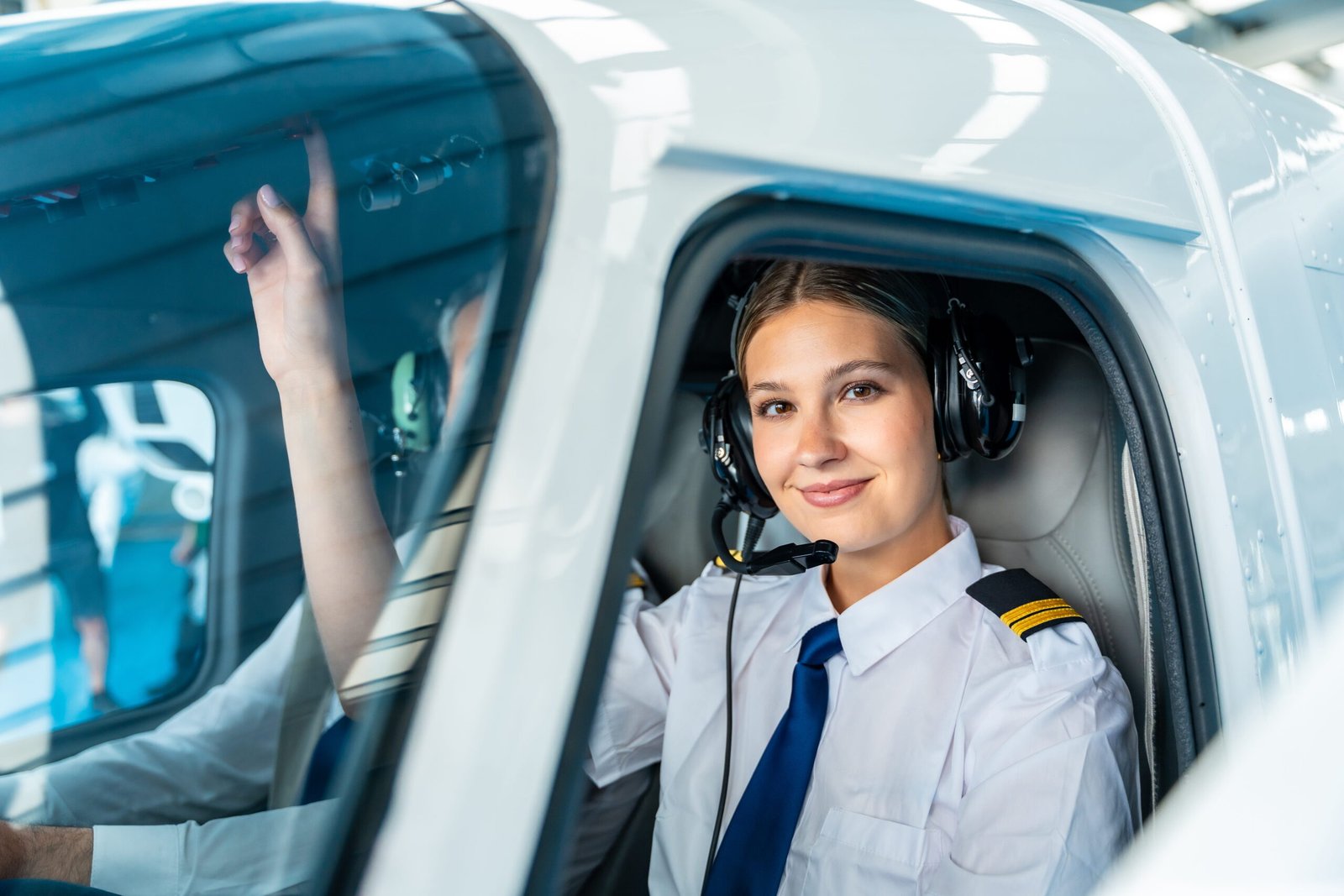
Women in Aviation recruitment and retention persist as some of the industry’s most urgent workforce challenges. Unfortunately, women remain significantly underrepresented in core aviation roles, especially on the flight deck, in engineering and maintenance, and subsequently at senior leadership level.
As the aviation industry continues to grow, despite current fuel and geopolitical disruptions, recruiting more women in aviation professions serves not only to diversify carriers’ workforce, but also to shape its resilience. Indeed, global demand for air travel is expected to more than double over the next two decades, reaching around 8 billion passenger journeys by 2043. Meeting this demand will require a broader talent pipeline, particularly by making better use of women already working in aviation and aerospace.
Airlines need to close the gender gap as a growth imperative. Equally important is the industry’s need to entice more women to steer the yoke; aspiring women in aviation need to know that their career choice will have the same level of flexibility and opportunity to grow as other industries. Apart from sponsorship and retention strategies, operators ought to work with expert recruiters to close the gender gap.
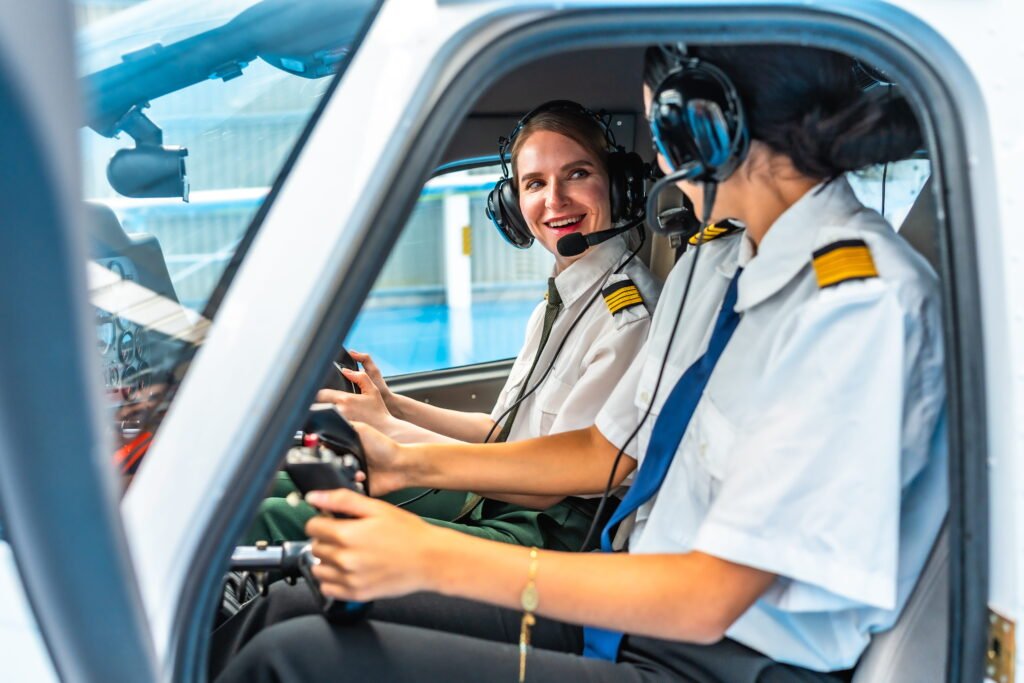
The State of Gender Diversity in Aviation
Women in aviation: Where the gaps remain
Although women account for roughly 42% of the global aviation workforce, their share collapses in technical, operational, and leadership roles.
Women’s representation in aviation is particularly low among female pilots and first officers, with only about 6% of commercial pilots globally, and fewer than 5% in most carriers. In maintenance and engineering, representation is even lower, with women only making up 3% to 4% of the workforce, with MRO/technician roles often below 3%. Consequently, leadership remains skewed as women hold about 15% of senior leadership roles across aviation worldwide, compared with ~25% across global industries. Although more than two dozen airlines now have female CEOs (up from three in 2019), the “broken runway” effect persists.
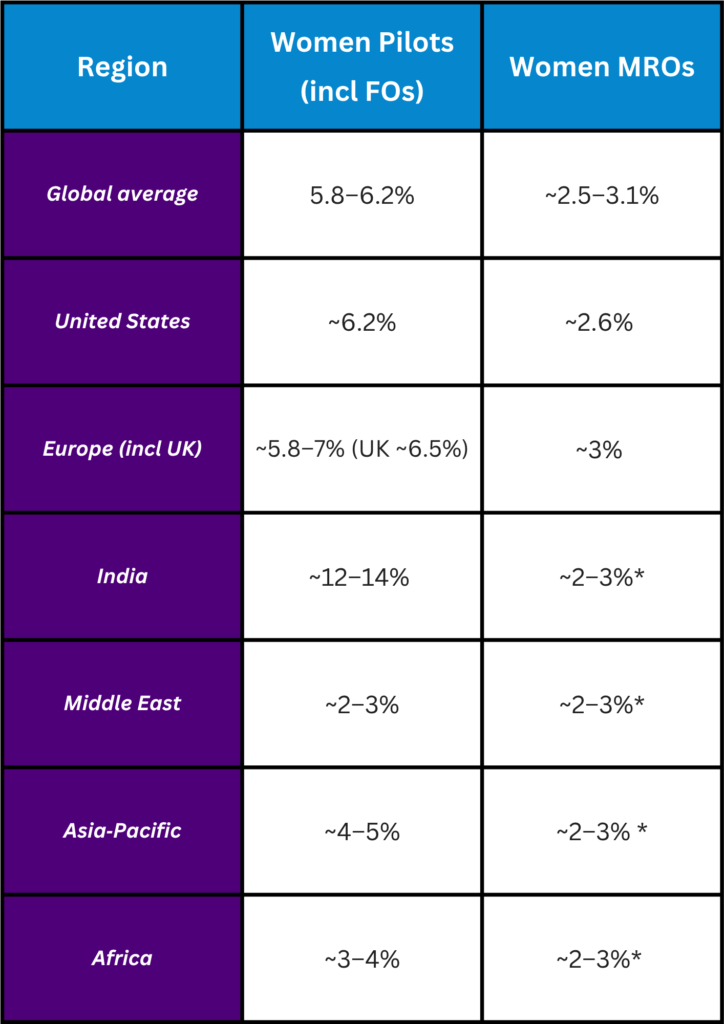
*Limited comparable data; some national carriers report progress but no consolidated regional percentage.
Women in aviation leadership, maintenance, and flight deck roles remain the three critical gaps for gender diversity in aviation. While cabin crew, ground operations, corporate functions, and some technology roles often exceed 30% to 40% female participation, the flight deck, MRO, and senior management lag far behind.
IATA’s 25by2025 data show women in technology roles rising, with several carriers reporting 30%+ female hiring in 2025. Malaysia Aviation Group, for example, reports ~36% female workforce share overall, surpassing the 25by2025 benchmark. Pockets of progress such as this demonstrate that when pathways are clear and policies are supportive, representation can shift quickly
Barriers for Women in Aviation: Why the Talent Pipeline Leaks
There are four overlapping clusters of barriers that vary by country but recur globally that largely affect women recruitment and retention in the aviation industry.
Financial and pipeline barriers are the first and most visible obstacles to female pilot recruitment. Pilot training typically costs $70,000–$100,000+ before first hire, creating a high entry threshold. Women are less likely to have family financial support for aviation careers, more likely to carry university debt, and less able to absorb early‑career financial risk. Combined, these factors fuel a “leaky pipeline” from student and private pilots to commercial and ATP/airline roles, directly constraining the aviation talent pipeline for female pilots and first officers.
Second, cultural and bias-related barriers continue to undermine efforts at retaining women in aviation. In fact, the aviation industry’s identity remains tied to military and test flying, often underpinning a “built by men, for men” narrative, overwhelmingly discouraging young women from joining. Statistically, ~30% of women vs ~10% of men experience gender-based discrimination during initial training, alongside more scrutiny and hostile cockpit and MRO cultures. In tandem, the lack of visible role models for women in the aviation industry only serves to intensify this reality.
Third, structural and policy barriers continue to impede recruitment and retention of women in aviation. Inflexible rostering, frequent base moves, and limited adjustability in early years, clash with primary caregiving responsibilities, which still fall disproportionately on women. Furthermore, inconsistent maternity or parental leave policies, and loss of seniority after career breaks, seriously penalize women in the aviation industry. At risk of sounding trivial, the very fact that equipment and PPEs are sized around male anthropometry create an institutionalized disadvantage, affecting day‑to‑day experience and long‑term career progression for women pilots and women MROs.
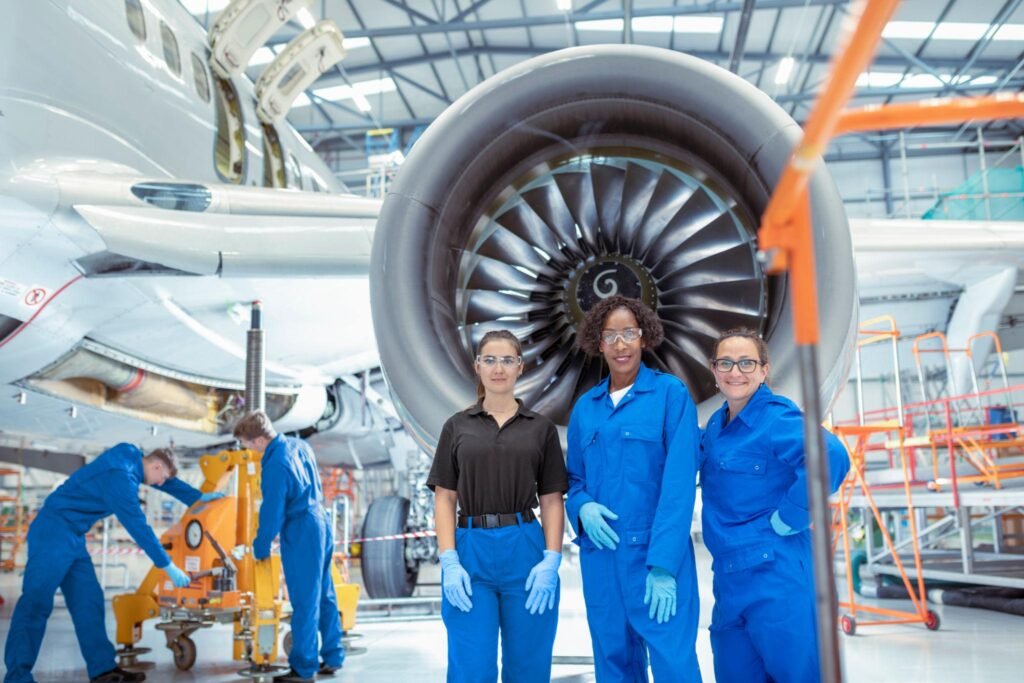
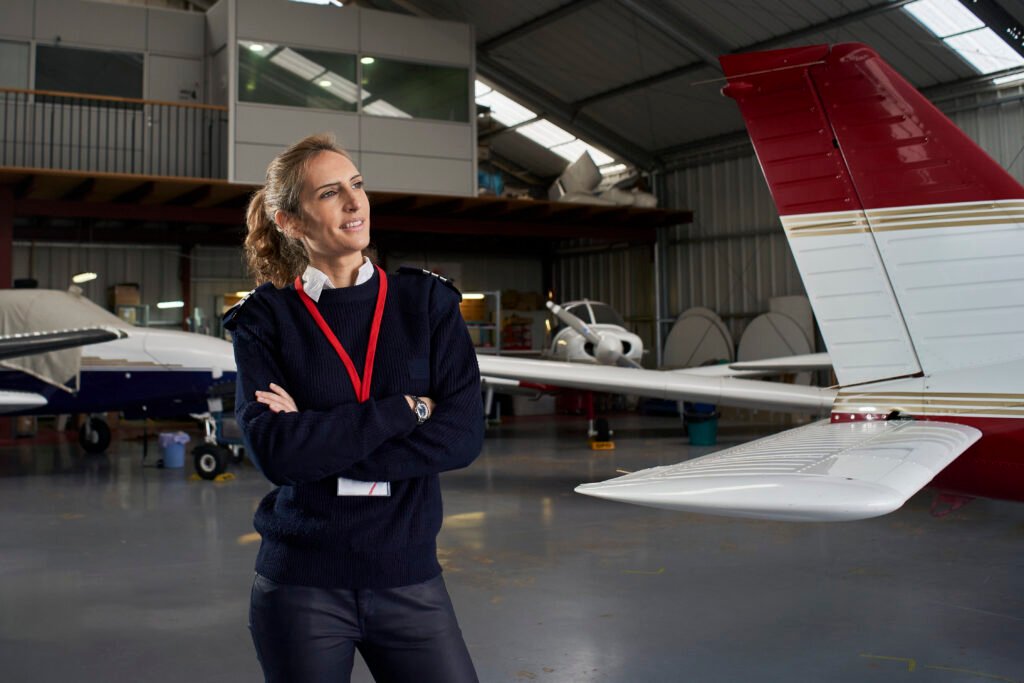
Finally, sector-specific dynamics such as MRO and leadership roles continue to impede women in aviation recruitment. For example, fewer than 3% of certified aircraft maintenance technicians are women in the U.S., driven by non-inclusive recruitment pipelines, male workshop culture, and tooling assumptions. In leadership pipelines, women encounter limited sponsorships, biased promotion practices, and cultures that reward traditionally male career paths. As a result, women in aviation maintenance and technical roles often stall before reaching senior positions, despite strong performance and qualifications.
Adopting such measures can be eased with aviation recruitment partners that support equal opportunities and believe that aviation should be accessible based on skills, qualifications, and potential. While operators benefit from constant access to an international and diverse aviation talent pool, aspiring women in aviation benefit from an inclusive platform and a team of professionals dedicated to finding the right position for them.
What Airlines Should Do: Inclusive Aviation Recruitment and Retention Strategies
Industry-wide targets and accountability for women in aviation
IATA’s 25by2025 initiative, with 216 signatories including 173 airlines, has successfully shifted diversity from an optional to a measurable tying progress to safety, innovation, and resilience. Reported outcomes include 31.4% of senior or management roles held by women (up from ~28% in 2021), female flight‑deck representation up ~34.8%, and women in technical roles up ~15%. This is already making a positive impact for leadership pipelines too, as female CEOs at IATA member airlines have risen from 3% to 9%.
Mechanisms include annual reporting on diversity metrics, minimum 25% female nominations to IATA governance roles, and public recognition via IATA Diversity & Inclusion Awards. Concurrently, this year’s ICAO’s Global Aviation Gender Summit pushed national action plans and gender-disaggregated data for regulators and ANSPs, reinforcing gender diversity in aviation as a strategic priority.
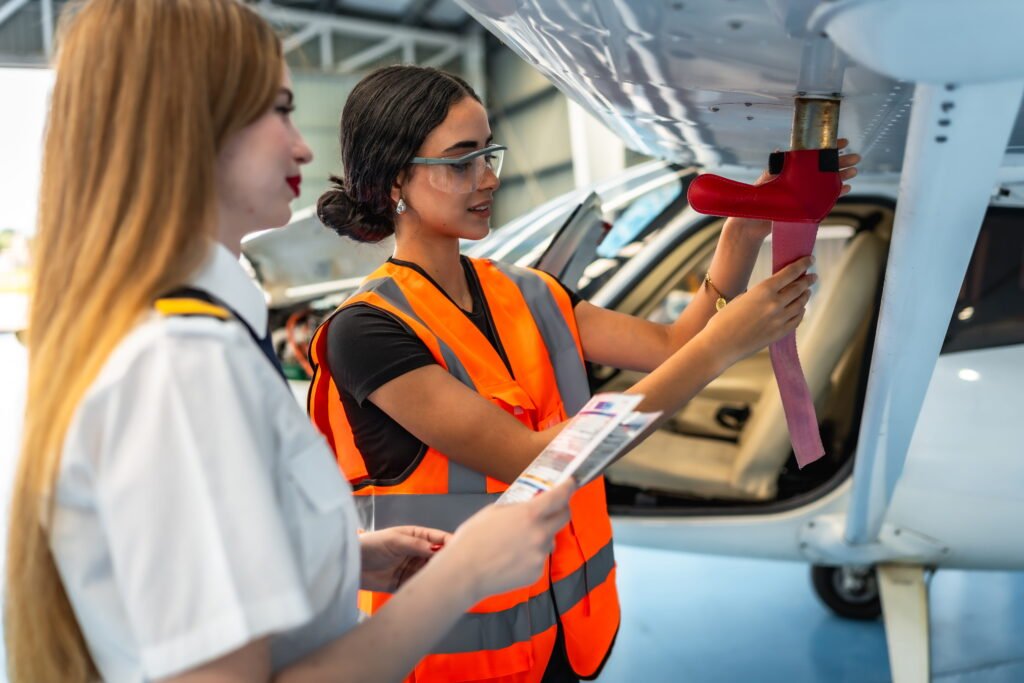
Achieving greater women participation in aviation undoubtedly needs industry-wide targets, but when it comes to operational realities, KPIs are not enough. Carriers need the proper recruitment tools and aviation talent networks to achieve and maintain these goals. Inclusive aviation workforce solutions that are modelled on retention help build a more resilient, representative, workforce.
Mapping the talent pipeline: Where women are lost and how airlines can intervene
A clear talent pipeline for women in aviation can be visualised in this way: Awareness → Training → Qualification → Recruitment → Employment → Retention → Leadership.
Yet, data show women drop out at multiple stages as awareness remains limited and training is costly. As for qualifications, the industry still suffers from bias in assessments and limited mentorship, which contribute to higher attrition among women trainees.
At recruitment stage, the amount of remaining women often narrows further when airlines rely on legacy networks and military pipelines where women are already underrepresented, instead of using inclusive aviation recruitment and diverse talent pools. When already in employment, women often succumb from inflexible rostering, inconsistent parental leave, and loss of seniority after career breaks, slowing their career progression or pushing them out altogether.
From experience, retaining women in aviation roles is impossible when work cultures directly or indirectly permit microaggressions and allow gaps in harassment reporting. Retention is further hampered from limited sponsorship or mentorship that persist in cockpit and MRO cultures.

At leadership level, women continue to stall before reaching senior roles due to biased or even discriminatory practices. Industry insiders will remember Ruth C. Taylor, the first African American flight attendant in the U.S., and how the aviation industry failed her, and multiple other women. But before we comfortably assume that “this was in the ‘50s” and has no room in today’s workforce culture, Kimberley Duffy’s story serves as a reality check. In short, Duffy was hired as a full-time commercial captain by Avelo Airlines in September 2023 as the only female captain, and when filing a safety report due to a male captain’s reckless flying (standard safety protocol), Duffy alleges that she faced severe blowback and was ultimately terminated from her position because she was perceived as a greater threat.
In such cases, airlines not only have the ethical duty, but also the legal duty, of conducting an official, unbiased investigation. Duffy’s lawsuit highlights systemic double standards, pointing out that her male counterparts routinely “engaged in similar or more serious conduct” regarding airline policies but were never disciplined or terminated.
Airline‑funded cadet programs and female pilot recruitment
Fully or heavily subsidized training for women is a major thrust in female pilot recruitment, often with guaranteed interviews or job prospects.
Examples include Air France’s cadet program (100% funded 24‑month ab‑initio; 25% of selected cadets were women in 2024–2025 intakes), IndiGo’s “Giving Wings to Fly” (100% sponsored CPL + type rating for women from economically weaker sections), Air Canada + CAE “Captain Judy Cameron” scholarships, and Wizz Air’s “She Can Fly” pathway.
Aspiring women in the industry need to match their qualifications and ambitions with airlines that value inclusive, expert crews. Working with inclusive aviation hiring specialists increases their chances to turn their training into real cockpit, hangar, and leadership opportunities with global carriers.

Mentorship and sponsorship for women in aviation leadership
Beyond entry, the retention and progression of recruited women in aviation depend on structured sponsorship. Programs ought to offer leadership development and mentorship for women in aviation and aerospace.
Targeted sponsorship and leadership tracks for women in aviation should become standard practice if the industry is to improve women in aviation recruitment and leadership.
Retention by design: Flexible rostering, parental leave, and inclusive hiring
Retaining women in aviation roles can be achieved by implementing realistic return‑to‑work frameworks, flexible and predictable rostering, equitable parental benefits, and peer support to improve retention after parental leave.
Airline HR reforms should include more consistent maternity and parental policies, clearer pathways back to line flying, and efforts to reduce bias in scheduling and base moves, especially for women pilots and women MROs. To tackle cultural biases, airlines must implement safe microaggression and harassment reporting so that women in aviation feel safe to speak up.
Crucially, operators need to establish a robust talent acquisition approach. Finding a recruitment partner that supports and factors in inclusive aviation recruitment is key to broader aviation workforce solutions. I\n this way, companies strengthen their aviation talent pipeline across pilot, engineering, MRO, and leadership roles, while implementing frameworks that effectively retain women in aviation roles.
Jekaterina Shalopanova, Aerviva’s Chief Business Officer, adds: “We see that the challenge is often not simply a lack of qualified talent, but whether employers are reaching the widest possible talent pool across markets, career stages, and backgrounds. Aviation does not have the luxury of overlooking qualified talent. Attracting more women is an important part of this, but recruitment alone is not enough – retaining and supporting their career progression is equally important in building a stronger and more resilient aviation workforce”.
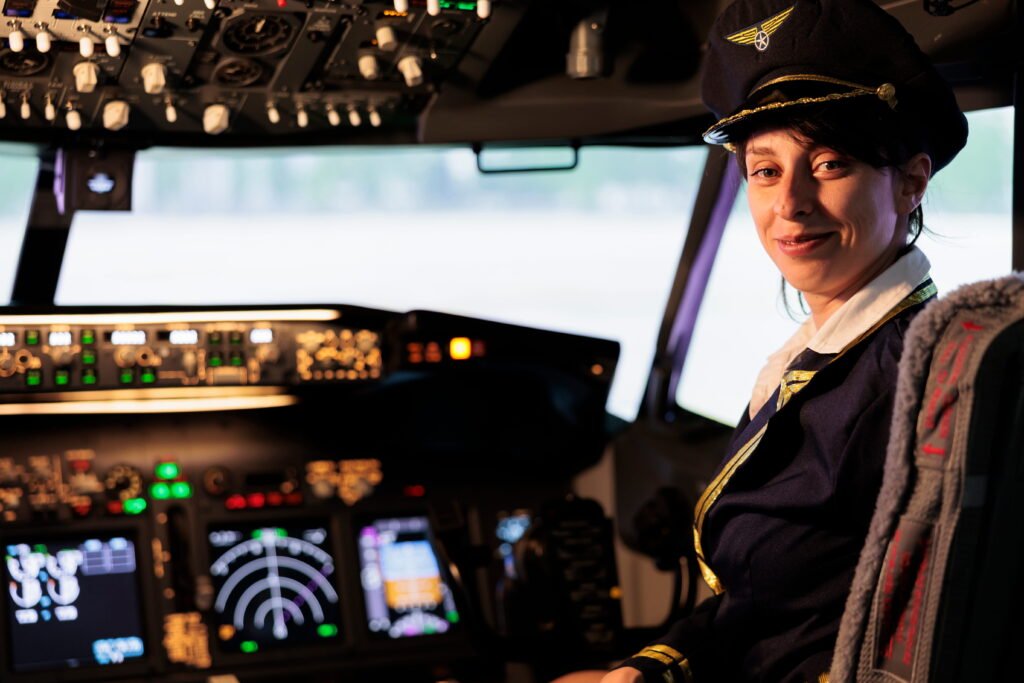
Conclusion: Women in Aviation Recruitment and Retention
The aviation industry needs to close its gender gap because it’s the right thing to do, but also because it’s a strategic imperative for growth, safety, and resilience. Women remain underrepresented on the flight deck, in MRO, and at senior leadership level, constrained by financial barriers, cultural bias, inflexible policies, and weak sponsorship.
Airlines must act across the entire talent pipeline: from awareness and funded training to inclusive recruitment, flexible rostering, equitable parental leave, and transparent promotion pathways. Industry targets and gender initiatives provide accountability, but real progress demands partnership with specialist aviation recruiters who prioritize diverse, qualified talent. By embedding inclusive hiring, mentorship, and retention by design, carriers can unlock a wider talent pool while improving cockpit, engineering, and leadership roles representation.
Contact Us
 United Arab Emirates