



Geopolitics Reshaping Global Air Routes: The Growing Pressure on Aviation Talent
Although the Middle East is no stranger to aviation disruption, the latest conflict in the region has prolonged the closure of airspaces, and caused the shutdown of all three major Gulf transit hubs. In reaction to this unprecedented situation, operators are adopting longer rerouted sectors, as flights must bypass restricted airspaces, increasing block times and fuel loads.
Furthermore, the immediate consequence of closing key transit corridors and hubs has resulted in aviation employees left stranded, has forced airlines to evacuate fleets or ground them altogether, and has caused major complications with crew positioning, scheduling, and accommodation.
By taking a closer look at the levels of disruption for operators in the region, the risks are piling up. Apart from short-term effects on traditional travel corridors, which have forced carriers to redesign routes, increase fuel planning, and reconsider hub positioning, the long-term effects on workforce dynamics and recruitment strategies are rearing their ugly head. For operators to be better- prepared for current and future disruptions, they must consider workforce resilience strategies, and adopt strategic recruitment solutions at the structural level.

Airspace Closures and Rerouted Flights
The current geopolitical tensions in the Middle East have imposed an unprecedented scale of airspace closures across the region. At peak disruption, nearly one in two flights in the Middle East did not operate as scheduled, and in turn, airlines have had to rethink their flight routes. Entire flight information regions (FIRs) including Iran, Iraq, Bahrain, and Kuwait, have been closed or heavily restricted following missile and drone activity across the Gulf, as flight tracking data confirms that airlines are actively avoiding Iranian and Iraqi airspace. As a result, these disruptions have forcefully removed the central Gulf corridor nearly in its entirety. As one of the busiest global aviation routes, carriers have rerouted most of their traffic north via Central Asia, or south via Egypt and Saudi Arabia.
Responding with widespread rerouted flights and cancellations, carriers across Europe and Asia have suspended operations to key destinations such as Dubai, Doha, and Tel Aviv, while others delay network resumptions entirely. Furthermore, operational shockwaves and disruptions have been felt far beyond the Middle East, with thousands of passengers stranded in Bali, Kathmandu, and Frankfurt amongst other regional hubs.
The operational impact has been immediate, with extended flight times and higher fuel burn per trip. This has been compounded by an increase in congestion within alternative airspaces, and in some cases, entire hubs have been temporarily shut, including Dubai and Doha, further disrupting global connectivity. The disruption has been costly; while the region normally operates approximately 900,000 seats per day at baseline capacity, hundreds of thousands of passengers have been affected.
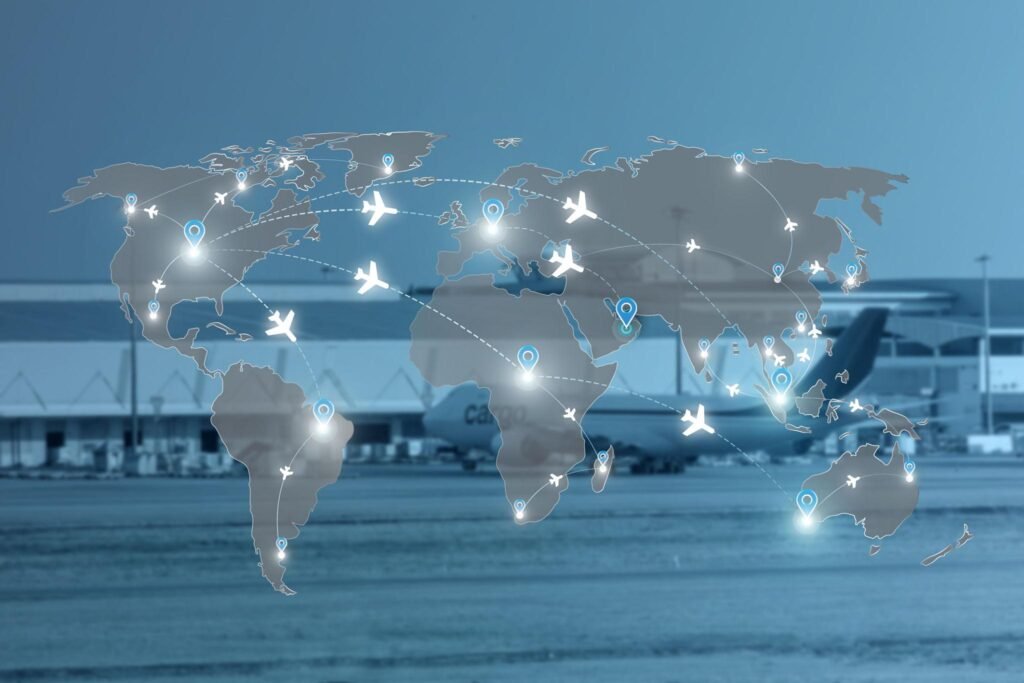
Avoiding Risk With Network Redesign
In terms of operational and fleet strategy, rapid network redesign has been a crucial strategic answer to these current disruptions. With the Gulf corridor effectively unusable, operators are rebuilding route structures around risk avoidance with three main operational shifts:
Strategic Rerouting Corridors: Airlines are funnelling air traffic through two primary alternatives; the Northern corridor via the Caucasus and Afghanistan, and the Southern corridor via North Africa and Saudi Arabia.
Network De-risking: Carriers are reducing exposure to volatile hubs. Some have suspended multiple Middle East routes and redirected capacity toward Asia, such as British Airways.
Cost Recalibration: Longer routings have imposed greater fuel consumption and have prompted airlines to introduce fuel surcharges, particularly on Asia–Europe sectors.
In sum, we are witnessing a shift toward risk-adjusted network planning, rather than traditional hub-and-spoke optimization.

Preparing for Current and Future Disruptions
Workforce resilience
The current instability has subsequently affected workforce dynamics. Airline operators can better-prepare for the current and any future disruptions by optimizing their workforce flexibilityand resilience. Simply put, airlines cannot respond effectively to disruptions without scalable human capital. Even in the eventual full reopening of airspaces, recovery is not automatically immediate and certain airlines risk having to rebuild operations from the ground up.
To mitigate this, operators need the rapid redeployment of pilots, engineers, and operational staff across regions. This can be achieved by establishing flexible crew pools and expanding contract-based staffing models, as well as partnering with global recruitment agencies to ensure continuity despite geopolitical shocks.
While the current conflict in the Gulf has brought aviation workforce resilience into stark focus, it is a universal challenge for carriers globally. In fact, in 2024 around 1.5%-3.2% of flights were cancelled globally, translating into 400,000+ flights being cancelled, as some airlines were forced to cut between 50% and 90% of their operations. The following year, in Europe specifically, around 16% of flights in Europe experienced delays or disruptions; further highlighting operational strain even in ‘normal’ conditions. In sum, aviation workforce resilience and flexibility are crucial elements to operators’ overarching HR strategy to be successful in normal times and weather the storm in times of conflict.
Strategic recruitment
Airlines are now dealing with crew displacements due to base closures, increased complexity in crew rostering and positioning, and a reluctance among staff to operate into high-risk regions.
In fact, pilots are leaving regions affected by conflict, further contributing to a growing mobility of talent, not only in the Middle East and the current affected regions, but worldwide. Aviation professionals are re-thinking where they are willing to work, with many seeking more stable markets. “What we clearly see today is that the strongest recruitment activity is coming from countries that are not directly involved in geopolitical conflicts but are located around these regions,” says Mindaugas Rainys, CEO of Aerviva. He continues: “These countries are actively expanding fleets, opening new operational bases, and strengthening their aviation sectors in order to attract pilots, engineers, and other aviation professionals seeking stability”.
This has been confirmed by recent industry reports, which indicate that airlines must reassign crews, reposition aircraft, and rebuild schedules even after short-term disruptions. In addition, the Aerospace Tech Review is also reporting spikes in MRO demand.
Aircraft range as a competitive advantage
The current disruptive climate has amplified the importance of aircraft range and efficiency. With the loss of direct routings, longer sectors could become the norm for a number of weeks or months to follow.
Ergo, airlines operating modern long-haul aircraft are better positioned to absorb these disruptions. Adding to this is the decline in aircraft utilisation due to longer rotations, and payload restrictions which are being applied on ultra-long sectors. As a result, fleet flexibility is becoming a strategic differentiator for operators. Without long-range and fuel-efficient aircraft, operators face reduced network viability under these current constraints.
Conclusion
As operational and human capital pressures mount in the Middle East and neighbouring regions for carriers, strategic solutions to counter disruptions are a must. While route planning must be dynamic and risk-averse, fleet strategy can prioritise range and flexibility. Network de-risking and cost re-calibration are critical aspects to consider
However, being better-equipped in terms of human capital is crucial to fully mitigate sudden disruptions and proceeding shockwaves. Workforce models should be aligned to support rapid redeployment, and avoid long-term disruptions even after conflicts cease. Partnering with global recruitment agencies could be the key to ensure structural, long-term solutions to human resource shortages.

 United Arab Emirates